Community and Radio

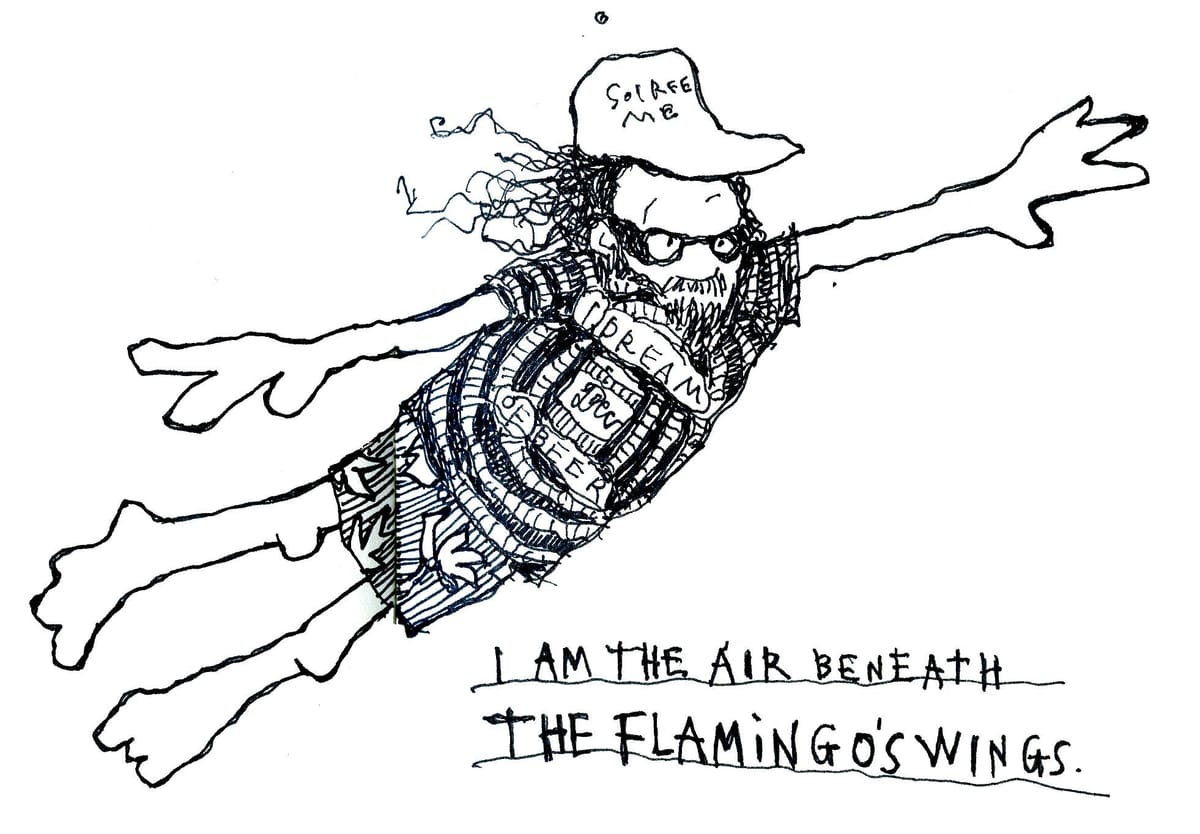
Back at the start of this century I was, for about a year and a half, manager of WMMT Radio in Whitesburg, Kentucky. WMMT's signal covers parts of Kentucky, Virginia, and Tennessee. In particular, they reach many of the jails and prisons that have been built in the impoverished region under the guise of "economic development," including two notorious Super-Max state prisons: Red Onion State Prison, in nearby Pound, Virginia, and Wallens Ridge State Prison up the road in Big Stone Gap.
Around the time that we arrived in Whitesburg, WMMT had started something quite different from the usual country, bluegrass, and old time music that was the staple of their music programming. Two young filmmakers launched "Holler to the Hood," a weekly hour of rap and hip-hop. Not surprisingly it was an immediate hit with anyone under twenty in the local area. (This was just prior to on-line streaming of music becoming a thing.)
What happened next though was unexpected: when the show was on the air it started getting collect phone calls which claimed to be coming from specific hip-hop artists, or naming specific hip-hop songs. The calls were coming from local jails and prisons.
Prisons in the US are a multi-billion dollar industry, and very profitable one. The goal of these corporations is not to rehabilitate prisoners, but to extract every last dollar for shareholders. One way of doing that is by selling access to phone calls.
The people in the big prisons in this region are by and large not local to Appalachia. They are instead from poor, inner-city places, often very far away from where the prisons have been located. In theory inmates can enjoy up to four hours each month of visits from lawyers or family members. In practice most families, especially those from hours away, can't afford the time off work, and the travelling costs, to find their way to small towns in the most rural parts of Virginia.
If your family can't visit you, you have two choices. You could write a letter, but those are screened and censored by the prisons, and often they choose not to let you have pens and paper anyhow. So your only option is the telephone.
As an inmate there is no way that you can receive a phone call. Your only option is to call out, a collect call to the family member that you're trying to reach. Collect calls are one of those things that has rapidly disappeared, but in its day it was simple: Instead of the caller paying long distance charges, they make a collect call to the answering party, and the charges would be added to that person's phone bill. What would happen is that your phone would ring, and you would hear "This is a collect call from Joe Jones. Will you accept the charges?" If you say or press "yes", you can then talk to each other. If you say "no" you would be disconnected.
So when WMMT got a collect phone call from "Snoop Dog" they refused the call, but knew to play "Ain't No Fun (If the Homies Can't Have None)"
That's fun, but calling your mother or girlfriend is a different thing: these aren't regular phone lines, they're run by the prison phone industry. That fifteen-minute call that you're allowed to make could cost them as much as $17 - simply out of reach for many inmate families. And of course calls were monitored by the prisons.
So sometime around 2001, Holler to the Hood decided to try a new idea: let families use WMMT to send messages to their incarcerated sons, husbands, and boyfriends.
No-one was entirely sure how it would work, but the idea was to open up a toll-free number that families could all, and then broadcast their calls so that inmates could hear them. By that time there was pretty strong network among prison activists, so word of the plan spread across the country.
There were tears in the eyes of most of us as we listened to these call-outs, but what was even more remarkable was what happened in the prisons: It became quiet, very quiet, as inmates stopped to listen to the calls, and hopefully hear from their own family members.
More than twenty years later WMMT is still doing this, and still breaking down the enforced isolation that these inmates endure.
Calls from Home broadcasts messages from friends and family members of those incarcerated in our region’s prison system. We record calls and shoutouts every Monday night during Sounds from Home between 7-9 pm ET, and then broadcast the messages that same night from 9-10 pm.
Friends of the show can call (888) 396-1208 to leave a message for a loved one on the inside.
What promoted this memory was a superb documentary presented by the BBC this week on World Radio Day. It honestly captured so, so much of what I love about Appalshop, and WMMT, and Appalachia in general. These are voices, and in some cases people that I know, and still love.

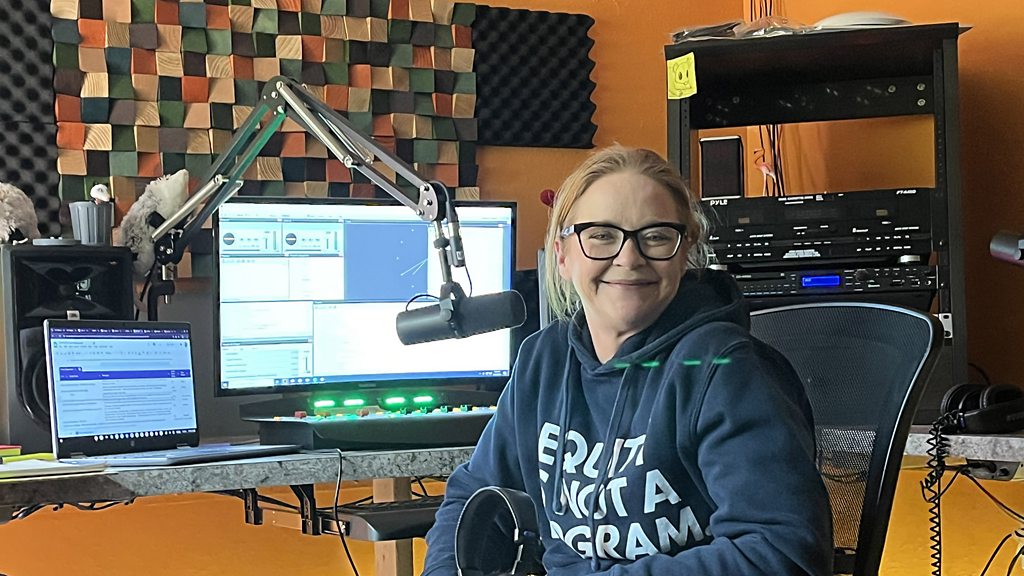
Honestly, twenty-six minutes can't hope to explore everything about WMMT - though they did manage a shout-out to the late, great Wiley Quixote, pictured at the top of this page). (And, peripherally, how did I ever forget "sworping")
I was at WMMT when the 9/11 attacks happened. To say that it shut down all activity is an understatement - it was obvious that no-one in the US knew how to respond on that day. It is significant that the host on the air that day, playing bluegrass music, a person about as white skinned, former police officer, good-old boy as you can imagine, decided that he was not about to say anything about the attacks, just play music. Even he understood the gravity of that situation.
Finally, late in the afternoon, I decided that WMMT had to do something to acknowledge the news that was unfolding. A call-in show was quickly rejected, as was any thought of us doing our own reporting. Instead, with some honest begging on my part, one of our co-workers, Katie Dollarhide, was drafted to sit down in front of a mic, and lead a prayer for all whose lives had been lost.
I am not, and have never been remotely religious, but I knew that for this community, on this day, that was what was needed most. I still stand by that decision.
We left Whitesburg soon after. Partly this was because arts and culture everywhere were suddenly seeing their funding cut back, and Appalshop was no exception. It was obvious that WMMT would lose at least one staff member. The choice, in my eyes, was between me, someone from "away", who had the means to escape back to Canada, and Jim Webb, Wiley Quixote, who was in many ways the heart and soul of the radio station, but seen by some as expendable. I didn't for moment think that I had a choice.
The other thing that caused me to leave was the sense that something had changed in the US that day. The country went from a sense of being invincible, to feeling frightened and vulnerable. Those of us from outside of the country could see the sudden shift to a war footing, and away from negotiation and peace-making.
Looking back today, 9/11 led directly to today's Trump regime. It took twenty years, but you can see the seeds of today's megalomania and creeping fascism in what George Bush wrought following the attacks.
I returned to Canada, and returned in so many ways as a different person from when I drove south to Kentucky.
Twenty-odd years later Applabarry is still my moniker, and my blog is still called "Three Squirrels in a Pressure Cooker." That phrase also came from Jim Webb, in discussing people hunting for food in the hills.
"Well, you know that they say. Three squirrels in a pressure cooker makes a mighty nice supper."
So take some time today to listen to that BBC documentary, and then, if you know the right people, open up a mason-jar of good moonshine.
--
The page about Jim Webb at Appalachian Historian really sums up his legacy:
Jim Webb’s work pushes against the idea that Appalachian resistance happens only in picket lines or legislative hearings. He shows how a hitchhiking poem, a shy off-grid writers’ cabin, a three-hour radio show full of polkas and “Speaking Your Pieces,” or a kitschy flamingo festival on a reclaimed ridge can all become forms of organizing.
In a time when floods, mine closures, and out-migration keep reshaping the region, Webb’s life offers one model for what it means to stay put without standing still: to keep listening, keep joking, keep editing and broadcasting, and keep inviting people up to the end of the whirled to imagine different futures for the mountains.
And, since I'm pretty sure that Jim would allow me to share his copyrighted work, here's his most famous poem, as originally published..