Looking at Life From on High

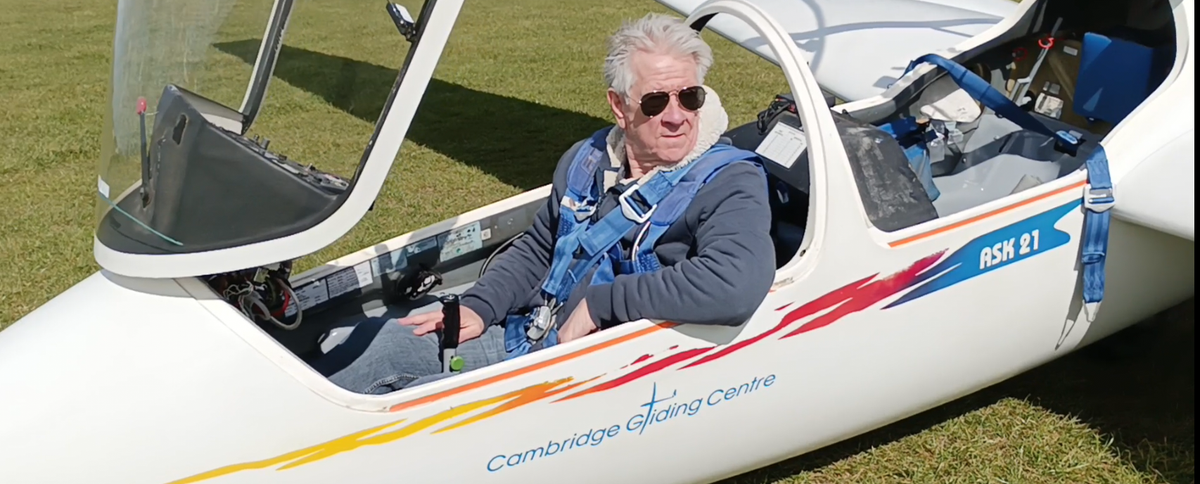
Some time soon the actual article will show up in the Globe and Mail, describing my first day at the Cambridge Gliding Centre. When that happens I'll be sure to let you know.
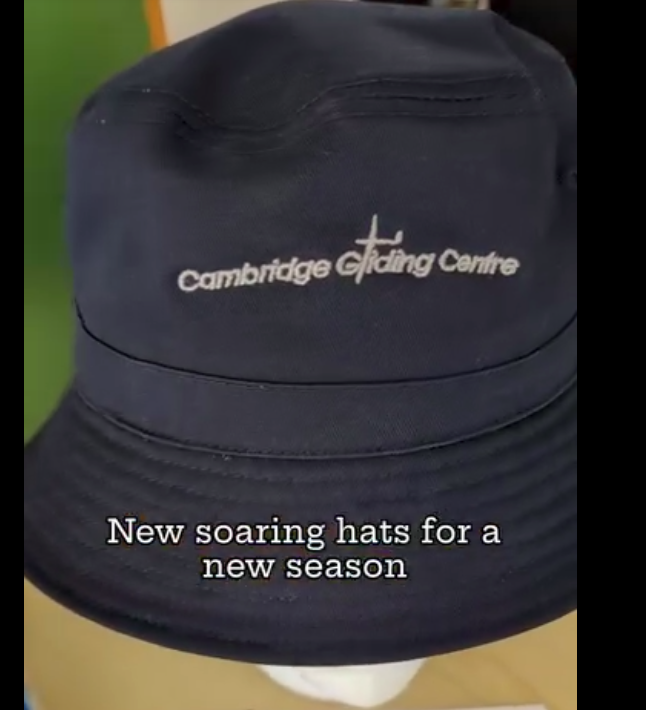
And yes, I now own the Official Bucket Hat.
In the weeks since that introduction I've made good progress. Yesterday I had seven flights - not long ones, as the weather wasn't particularly good for that. But by the end of the day I could handle a winch take-off, level flight, and both right and left turning. The final turn to land still baffles me, but next time I expect to get a better handle on that.
The thing that I've learned, yet again, is to slow down, have a gentle touch, and let the plane, and the air around it, do the work. It's a lot like canoeing.
And oh yes - it rained. Given the lack of windshield wipers that offered a whole new experience!
Traditionally gliders have been launched by being towed behind another plane until they reached a good altitude. That gets you higher, and is more relaxing, but it's also expensive.
Most people these days (at least in Cambridge) do a winch launch. That involves a very large V-8 engine, very large reels, and a very, very, very long cable. The cable attaches to the bottom of the plane, and when the launch master says to go, pulls you very, very fast, first, briefly, over the grass, then up at a 45 degree angle until you hit around 1000 feet. After about six or seven seconds.
(This is England. It's still feet.)
At that point a loud bang tells you that the cable has dropped off, and you're sailing with no power, just your skills as a pilot. On a good day you can catch a thermal, and circle higher and higher into the sky. Or, if you're a beginner, and the weather is mediocre, you just stay up a few minutes then are back on the ground.
I'm loving it.
The other ongoing project right now is my novel. That began with the story of my father's first wife, and her death. As such things go, that has become more of a story about my mother, her possibly wild life as a young woman in Calgary, and of course how she wound up marrying my dad in the 1950s.
Because she destroyed virtually everything about him after his death I find myself inventing a past that feels right, even though there's really no way to know for sure. It's a fascinating project: looking back at these two people, and imagining them before children, before I was born, and with the kind of attitudes and practices that anyone in their early twenties tends to move towards.
And imagining conversations, and thoughts, and fears and thrills - after years of writing either straightforward opinion columns, or journalistic work, this is something almost entirely new.
(Actually, I did enter the Three Day Novel Contest many years ago, so I guess this technically my second novel.)
Looking back at your parents necessarily leads to looking back at your own childhood. I'm realizing that no matter how wonderful my mother was, it was not a particularly positive life. Stories are percolating up from my memory that I hadn't considered for decades, and they're not really positive ones.
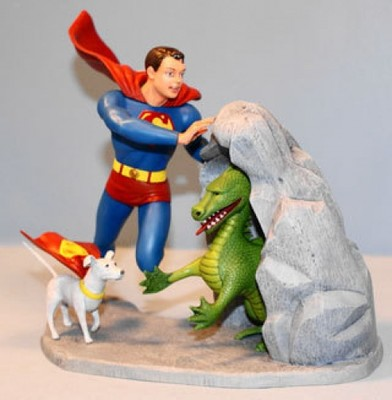
Superboy flew across the living room. So did Crypto, and the rest of the brightly painted plastic model kit. Barry had spent days assembling the pieces of the kit, gluing them together carefully, then painting them in the red, yellow, and blue that defined Superboy’s costume.
Now the model kit that had earned pride of place above the living room fireplace was in a thousand pieces, scattered across the floor around a young boy, shaking, crying, and fearful in the corner.
“Ralph!,” screamed Evelyn, “Stop!”
Ralph turned and strode out of the room, and the house, muttering, “Stupid kid.”
Evelyn wasn’t even sure what it was this time. More and more Ralph just exploded, with no apparent reason. Keeping the children away from him seemed to help, but not always.
The week before it had been at the supper table, Ralph at the head of the table, when Barry made some smart-ass comment about his sister, calling her “Poopie.” Suddenly a full glass of milk flew across the table, bouncing off of Barry’s chest, and soaking him from head to toe.
“Don’t you dare talk to your sister that way!” screamed Ralph.
More crying, more sobbing, as Evelyn led Barry away from the table, trying to calm him as she sent him up to his room.
And, I guess inevitably, this leads me to look back at my own life, and my own behaviour, and the things that I've done in the past. I believe that I've done much more good in this world than bad, by a significant margin, but I also am acknowledging that on occasion I've been the kind of person that I'd rather not be.
So on one hand I'm soaring high, and on the other I'm plumbing the depths.
Meanwhile, with a new laptop, and some good headphones, I'm digging back into my music collection. Check out this killer Isaac Hayes track. Stay for the amazing guitar at the end.
AI will not replace this.
And hey, what the heck, remember the glory days of cub?
When Lisa Marr, Robynn Iwata and Valeria Fellini formed cub in early 1992, the plan of three Vancouver friends (who had met while working at CiTR, the campus radio station of the University of British Columbia) was to get together in the basement to write and play music and have fun doing so. Simple as that. The fact that they were virtual neophytes at their respective instruments did not hinder them; and despite having no grand aspirations, the trio were determined and steadfastly D.I.Y. Iwata even had to play sitting cross-legged on the floor for the first several months because as she herself admits, “I just needed to keep a close eye on my hands and my chord cheat sheets, and in cub that wasn’t a crime. It wasn’t a gimmick. I wasn’t trying to be twee. We always encouraged one another to just do our best by whatever means and at whatever stage we were at.”